European Chip CEOs Cite Robotics and Physical AI as Key Growth Areas
Chief executives of major European semiconductor firms argue the region can successfully rival the US and Asia in robotics and physical artificial intelligence.
 💻Tech
Photo: CNA
Key points
- Infineon, STMicroelectronics, and NXP CEOs see physical AI as a major opportunity for Europe.
- The region plans to leverage its existing strength in automotive and industrial technology.
- STMicroelectronics has already deployed early-stage humanoid robots in its Malta factory.
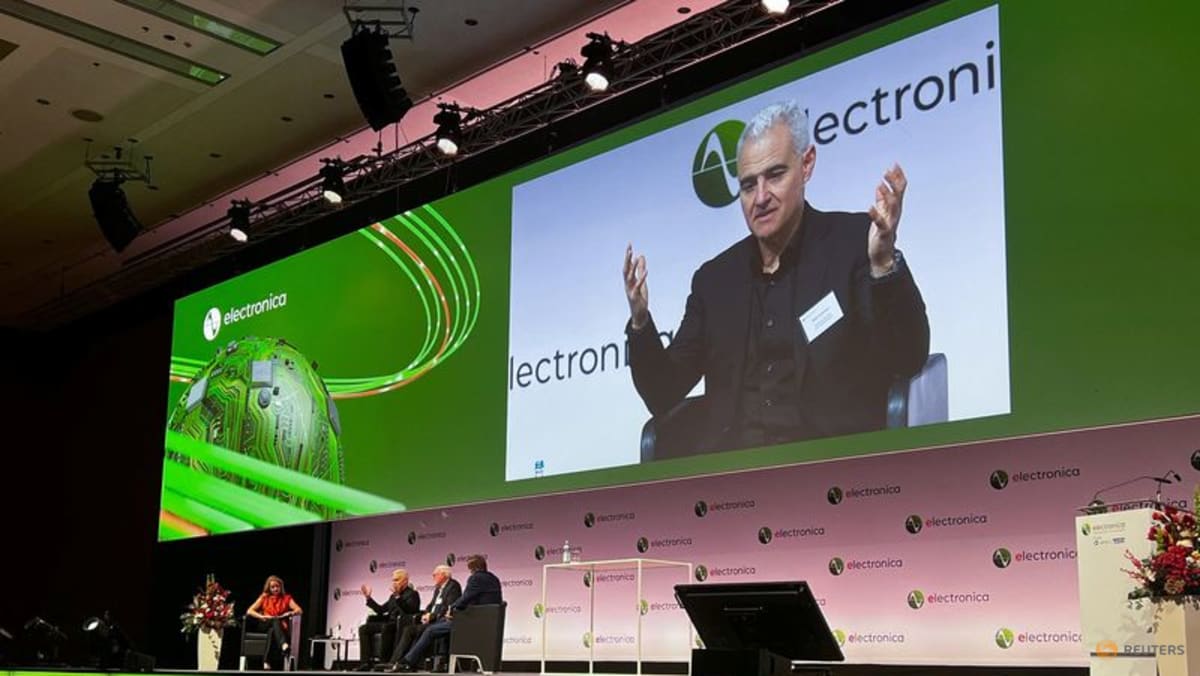
Europe holds a strong competitive position to lead in robotics and physical artificial intelligence by leveraging its foundational expertise in the automotive and industrial sectors, according to the heads of leading European semiconductor companies. Speaking at an industry gathering in Munich on Monday, top executives from Infineon, STMicroelectronics, and NXP highlighted that the ongoing transition of AI from data centers into machinery will significantly boost demand for reliable hardware.
The three firms supply essential power chips, microcontrollers, and sensors utilized in automated systems, competing directly with American counterparts such as Texas Instruments and onsemi. Infineon CEO Jochen Hanebeck emphasized that capturing the industrial and physical AI market is a critical objective for the continent, noting areas where Europe currently trails other global regions.
Developing physical AI demands deep collaboration between semiconductor producers and end-users, requiring robots to undergo training in simulated environments prior to operational deployment, noted STMicroelectronics CEO Jean-Marc Chery. STMicroelectronics has already integrated humanoid robots from Italy-based Oversonic into manufacturing facilities, starting with a trial at a Malta semiconductor plant, though widespread adoption across the industry remains limited to early-stage factory tests.
NXP CEO Rafael Sotomayor pointed out that Europe's established engineering legacy provides a distinct advantage in building secure and dependable systems. As artificial intelligence shifts from generating text recommendations to executing physical actions, system failures carry severe real-world repercussions, underscoring the necessity for robust safety standards.
Source CNA — channelnewsasia.com/business/europe-can-compete-in-robotics-and-phy… ↗
Read next
 📈Economy
Japan Tobacco Shares Rise Amid Potential Imperial Brands Takeover Bid
Japan Tobacco shares rose following reports of a potential partnership to acquire British cigarette maker Imperial Brands, which is also being eyed by Altria.
 🏛️Politics
Philippine digital activists scrutinize 2027 national budget for corruption
A growing movement of Filipino influencers and tech professionals is utilizing digital tools to audit government spending and identify potential red flags in the 2027 nat…
 📈Economy
Argentina Bans Central Bank From Printing Money to Fund Government
Argentina's Congress has passed legislation prohibiting the central bank from financing government spending, marking a major shift in the nation's fiscal policy.
 🏛️Politics
DOJ Reportedly Lacked Access to Rubio Memo in Nvidia CEO Investigation
The U.S. Department of Justice reportedly never received a key intelligence memo that triggered the brief ouster of Nvidia CEO Jensen Huang. The revelation adds complexit…
 🏛️Politics
New Book Alleges Financial Ties Between Jared Kushner and Gulf States
A new book by journalist Matthew Cole alleges that Jared Kushner received $2 billion in funding from Saudi and Emirati sources during his time as a Trump administration o…
EU Budget Summit Concludes Early as Key Appointments Announced
European leaders have wrapped up budget discussions prematurely, while Pablo Hernández de Cos is tapped to lead the European Central Bank.