Can Green Growth Actually Reverse Global Climate Change?
Research shows that while several developed nations have decoupled economic growth from carbon emissions, global resource consumption continues to rise, presenting a major challenge for climate mitigation.
 🔬Science & Health
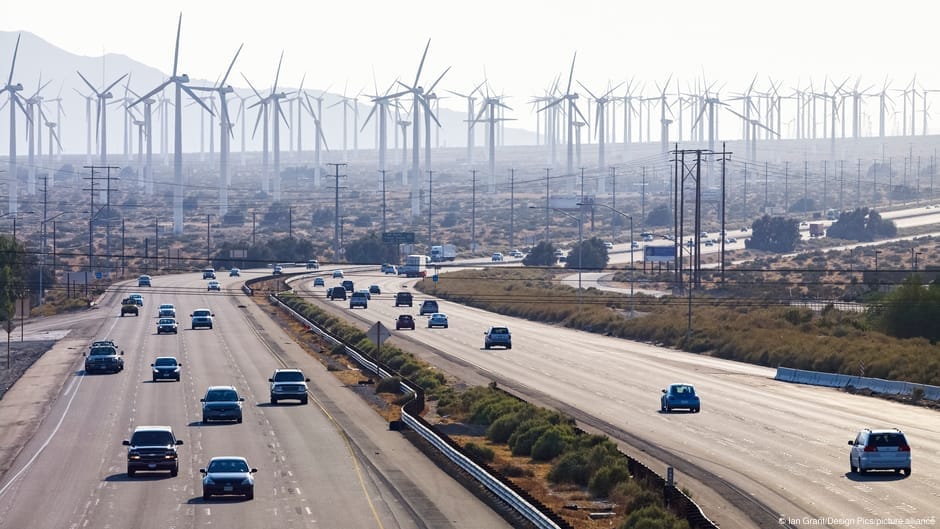
Photo: DW English
Key points
- Planetary boundaries
- Decoupling emissions
- Resource consumption
Human civilization is currently operating on an unsustainable trajectory, having already crossed seven of nine planetary boundaries critical for sustaining life, including climate change and biosphere integrity. To avert severe climate impacts, experts argue that traditional socioeconomic models must evolve toward green growth, which aims to expand economic output while simultaneously reducing carbon emissions and resource extraction.
According to studies evaluated by researchers including BOKU University social ecology professor Helmut Haberl, the world's economic output can theoretically grow long-term while generating significantly fewer fossil fuel emissions. Several developed economies, including the United Kingdom, the United States, Japan, Australia, and the European Union, have successfully expanded their economic output while recording a drop in carbon dioxide emissions.
However, a complete global decoupling of growth and emissions remains rare. While regions like India and parts of Africa and Southeast Asia are increasing efficiency, their overall emissions continue to rise. Furthermore, heavy industries like steel and chemicals face deep challenges because carbon is embedded directly into their manufacturing chemical processes rather than just serving as an energy source.
Another major obstacle is the rebound effect, where cheaper green technologies and increased efficiency encourage higher overall production and consumption. Global resource use has tripled over the past fifty years and could increase by another 60% by 2060, prompting experts to warn that efficiency gains alone may not suffice to stop environmental degradation.
- Planetary Boundaries: Earth has crossed seven of nine critical thresholds necessary to sustain life.
- Decoupling Progress: The EU and several developed nations have grown economically while lowering CO2 emissions.
- The Rebound Effect: Efficiency savings are often offset by increased overall production and consumption.
Source DW English — dw.com/en/how-a-green-economy-could-help-reverse-climate-change/a-7… ↗
Read next
 📈Economy
Japan Tobacco Shares Rise Amid Potential Imperial Brands Takeover Bid
Japan Tobacco shares rose following reports of a potential partnership to acquire British cigarette maker Imperial Brands, which is also being eyed by Altria.
 🏛️Politics
Philippine digital activists scrutinize 2027 national budget for corruption
A growing movement of Filipino influencers and tech professionals is utilizing digital tools to audit government spending and identify potential red flags in the 2027 nat…
 📈Economy
Argentina Bans Central Bank From Printing Money to Fund Government
Argentina's Congress has passed legislation prohibiting the central bank from financing government spending, marking a major shift in the nation's fiscal policy.
 🏛️Politics
DOJ Reportedly Lacked Access to Rubio Memo in Nvidia CEO Investigation
The U.S. Department of Justice reportedly never received a key intelligence memo that triggered the brief ouster of Nvidia CEO Jensen Huang. The revelation adds complexit…
 🏛️Politics
New Book Alleges Financial Ties Between Jared Kushner and Gulf States
A new book by journalist Matthew Cole alleges that Jared Kushner received $2 billion in funding from Saudi and Emirati sources during his time as a Trump administration o…
EU Budget Summit Concludes Early as Key Appointments Announced
European leaders have wrapped up budget discussions prematurely, while Pablo Hernández de Cos is tapped to lead the European Central Bank.