Election Modeling Model Faces Scrutiny After Midterm Forecast Discrepancies
The Economist's congressional forecasting model underperformed in recent midterm elections, highlighting the limitations of top-down predictive methodologies.
 🏛️Politics
Photo: Hindustan Times World
Key points
- The Economist's top-down model significantly underestimated Democratic performance in the midterms.
- A sharp decline in undecided voters in the final weeks caused the model to incorrectly adjust its predictions.
- Developers suggest that models trained on small historical datasets are prone to over-fitting and require more robust sensitivity testing.
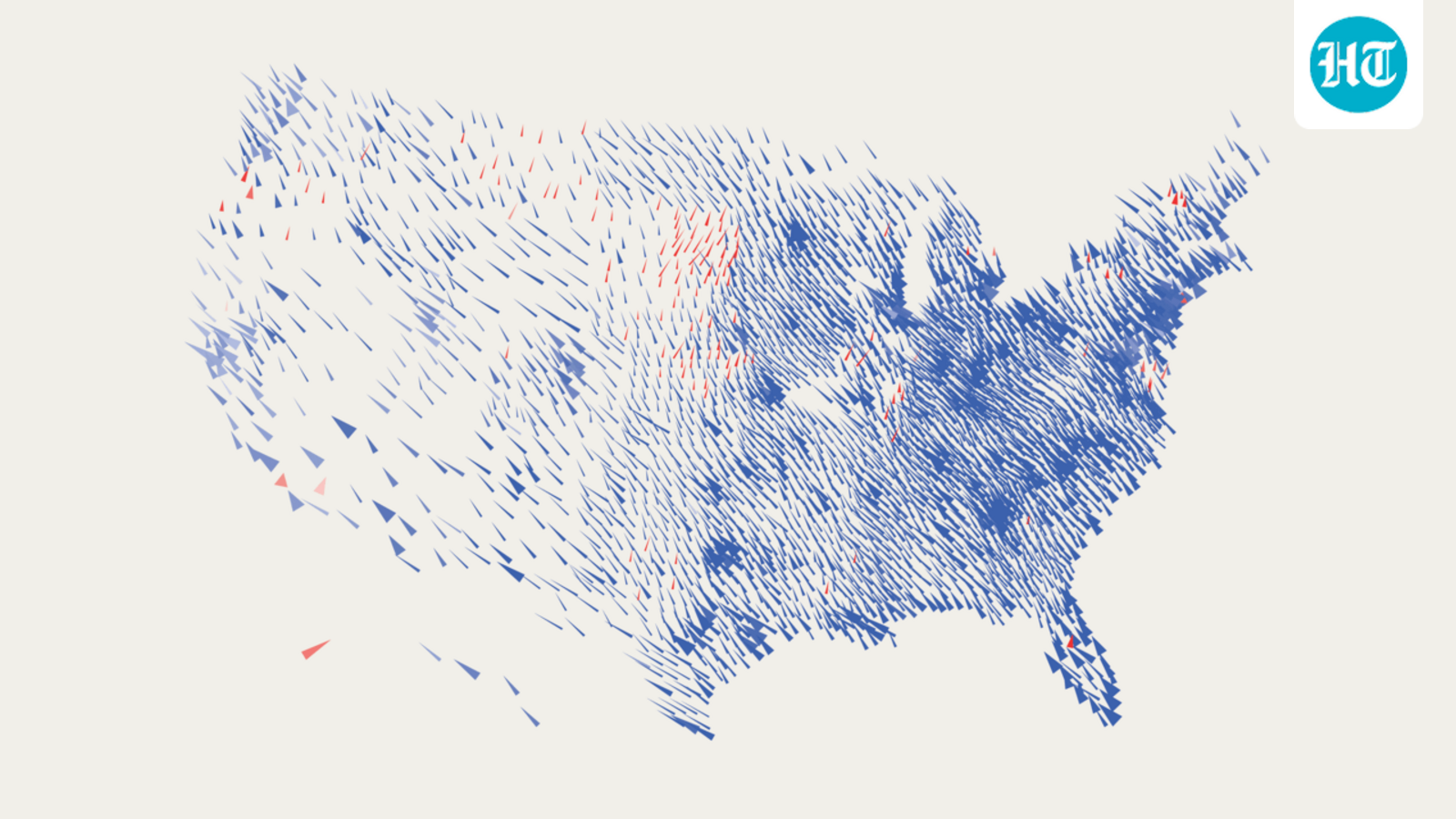
The Economist's proprietary congressional model struggled to accurately predict the outcome of recent U.S. midterm elections, significantly underestimating the performance of Democratic candidates. While most competing forecasts leaned heavily toward a Democratic wave, the publication's model assigned only a 52% probability to a Democratic Senate victory and failed to anticipate the final House seat count.
Unlike traditional "bottom-up" models that aggregate individual race predictions, this model utilized a "top-down" approach. It attempted to forecast the national popular vote by adjusting for anticipated polling errors and historical biases, such as the tendency for generic ballot surveys to overestimate support for leading candidates.
The model's failure was largely attributed to a late-stage adjustment based on the share of undecided voters. As the number of undecided voters dropped to historic lows in the final weeks, the model incorrectly predicted how these individuals would break, leading to a last-minute reduction in the projected Democratic margin. The developers noted that the model's reliance on limited historical datasets made it susceptible to over-fitting when faced with atypical voter behavior.
Source Hindustan Times World — hindustantimes.com/world-news/off-the-charts-newsletter-a-post-mort… ↗
Read next
 📈Economy
Japan Tobacco Shares Rise Amid Potential Imperial Brands Takeover Bid
Japan Tobacco shares rose following reports of a potential partnership to acquire British cigarette maker Imperial Brands, which is also being eyed by Altria.
 📈Economy
Argentina Bans Central Bank From Printing Money to Fund Government
Argentina's Congress has passed legislation prohibiting the central bank from financing government spending, marking a major shift in the nation's fiscal policy.
EU Budget Summit Concludes Early as Key Appointments Announced
European leaders have wrapped up budget discussions prematurely, while Pablo Hernández de Cos is tapped to lead the European Central Bank.
 💻Tech
Researchers Use AI to Optimize Molecular Cage Catalysts
Scientists from the universities of Birmingham, Edinburgh, and Oxford have developed a high-speed screening method paired with machine learning to identify highly efficie…
 📈Economy
UK to Pay Participation Fees for New EU Trade Agreements
The British government has confirmed it will pay operational contributions and an additional 4% participation fee to access EU systems for new trade and regulatory agreem…
 🌍World
Diplomatic Tensions Rise After Clashes at Besiktas-Hapoel Football Match
A UEFA Europa League match between Turkey's Besiktas and Israel's Hapoel Beer-Sheva in Georgia was disrupted by violent clashes between fans and police, triggering a dipl…