Pakistan’s Draft Auto Policy Faces Scrutiny Over Public Transit Needs
Pakistan is finalizing its 2026-31 auto policy, sparking debate over whether the framework prioritizes elite car ownership over the urgent mobility needs of the general population.
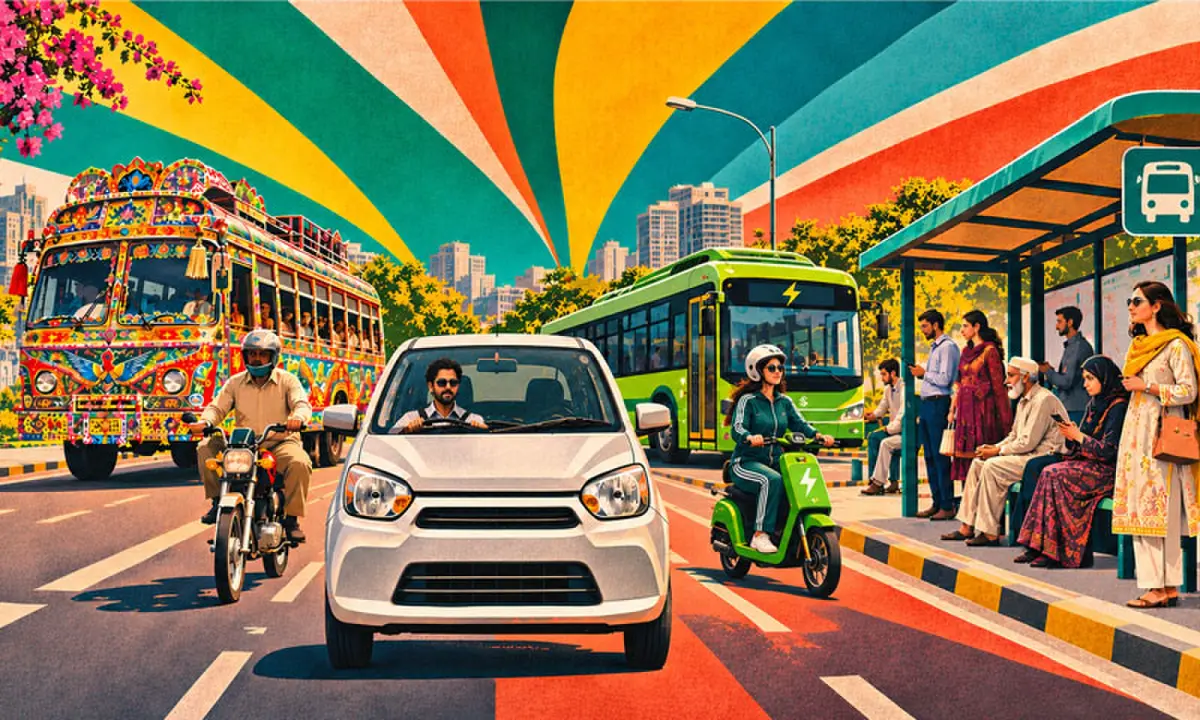 📈Economy
Photo: Dawn
Key points
- Only 6.6 percent of Pakistani households own a car, while 41 percent own no vehicle.
- The draft policy aims to reduce tariffs and promote electric vehicles to stimulate the market.
- Critics demand the policy prioritize affordable public transport over individual car ownership.
The Pakistani government is currently finalizing its Auto Policy 2026-31, a draft framework designed to reshape the nation's automotive landscape through tariff adjustments, increased competition, and the promotion of electric vehicles. While the plan has received preliminary approval from Prime Minister Shehbaz Sharif, it now faces review by the Finance Ministry and the International Monetary Fund. The policy aims to modernize the sector by potentially lowering import duties and incentivizing greener transportation alternatives.
Critics, however, argue that the proposed measures remain overly focused on manufacturers and the small percentage of households that can afford private cars. Current data indicates that only 6.6 percent of Pakistani households own a car, while roughly 41 percent own no vehicle at all. For the vast majority, the primary economic challenge is not the price of a new vehicle, but the rising cost of daily commuting via unreliable public transport.
The debate highlights a disconnect between industrial policy and the lived reality of the workforce. While the draft includes provisions for electric vehicle incentives, experts suggest that fiscal support for single luxury purchases often dwarfs the subsidies available for mass transit solutions. As the government moves toward final approval, there is mounting pressure to ensure that the policy addresses the affordability of bus fares and the accessibility of essential travel for those who rely on public infrastructure to earn a living.
Source Dawn — dawn.com/news/2042743/rethinking-pakistans-auto-policy ↗
Read next
 🏛️Politics
Philippine digital activists scrutinize 2027 national budget for corruption
A growing movement of Filipino influencers and tech professionals is utilizing digital tools to audit government spending and identify potential red flags in the 2027 nat…
 🏛️Politics
DOJ Reportedly Lacked Access to Rubio Memo in Nvidia CEO Investigation
The U.S. Department of Justice reportedly never received a key intelligence memo that triggered the brief ouster of Nvidia CEO Jensen Huang. The revelation adds complexit…
 🏛️Politics
New Book Alleges Financial Ties Between Jared Kushner and Gulf States
A new book by journalist Matthew Cole alleges that Jared Kushner received $2 billion in funding from Saudi and Emirati sources during his time as a Trump administration o…
EU Budget Summit Concludes Early as Key Appointments Announced
European leaders have wrapped up budget discussions prematurely, while Pablo Hernández de Cos is tapped to lead the European Central Bank.
 💻Tech
Researchers Use AI to Optimize Molecular Cage Catalysts
Scientists from the universities of Birmingham, Edinburgh, and Oxford have developed a high-speed screening method paired with machine learning to identify highly efficie…
 🌍World
Diplomatic Tensions Rise After Clashes at Besiktas-Hapoel Football Match
A UEFA Europa League match between Turkey's Besiktas and Israel's Hapoel Beer-Sheva in Georgia was disrupted by violent clashes between fans and police, triggering a dipl…